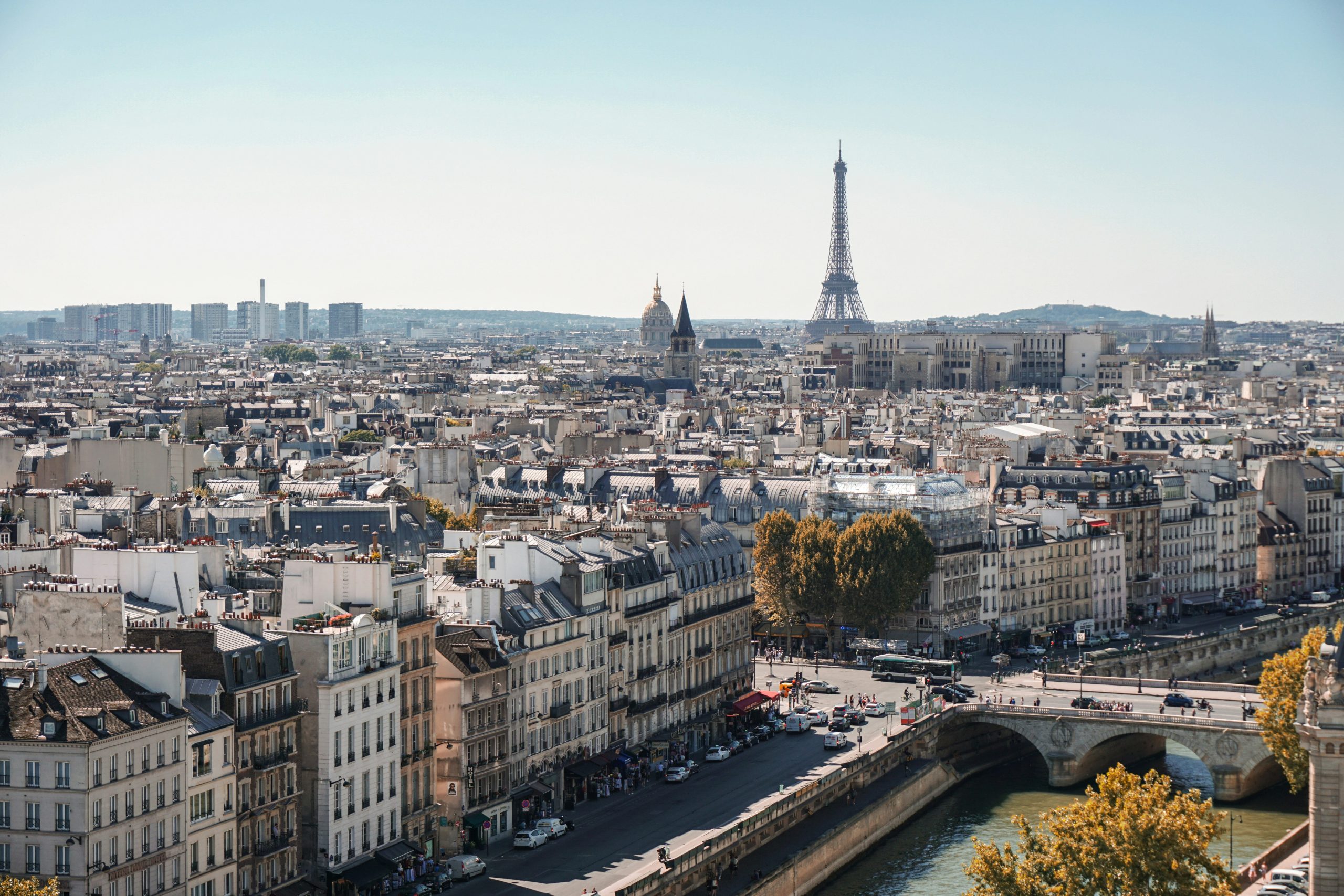
I’ve watched too many travelers make the same mistake: booking a hotel based solely on its proximity to the Eiffel Tower, only to spend their entire trip on the Metro because nothing else is within walking distance. Or worse, ending up in a tourist-trap neighborhood where a mediocre coffee costs for double the average price and authentic Parisian life is nowhere to be found.
The truth is, Paris isn’t one city. It’s 20 distinct neighborhoods (arrondissements), each with its own character, price point, and proximity to what actually matters for your trip. Whether you’re after Instagram-worthy views, authentic local experiences, or simply the best value for your euro, choosing the right neighborhood can make or break your Paris experience.
Paris Travel Snapshot
Let’s start with the numbers that matter. Paris currently offers thousands of hotel rooms and tens of thousands of short-term rentals. However, new regulations have dramatically changed the short-term rental landscape, adding additional limitations. As of 2025,Airbnbs cannot be rented out for more than 90 days a year. The city has seen hundreds of new hotel openings since the Olympics, ranging from luxury palaces to budget-conscious capsule hotels.
However, here’s what the tourism boards won’t tell you: specific neighborhoods are buckling under the pressure of overtourism. Montmartre’s Sacré-Cœur alone draws 11 million visitors annually, transforming once-charming streets into what locals bitterly refer to as “Disneyland Paris.” Meanwhile, emerging districts like Belleville and the 19th arrondissement offer authentic experiences at half the price, if you know where to look.
The Airbnb crackdown is real. Paris authorities are now imposing hefty fines on illegal rentals and implementing London-style limits on the number of rental nights per year. If you’re considering an apartment rental, verify that the listing displays a valid registration number; otherwise, you risk arriving to find your booking canceled.
How to Choose the Right Paris Neighborhood
Stop thinking about Paris neighborhoods like a tourist and start thinking like a strategic traveler. Your ideal arrondissement depends on five key factors:
- Primary interests: Museums and monuments (1st-7th), nightlife (10th-11th, Marais), shopping (8th, Marais), authentic local life (19th-20th)
- Budget reality: Central arrondissements (1st-8th) average $220-$450/night; outer districts (15th-20th) offer comparable quality at $70-$170/night
- Mobility needs: If walking is difficult, avoid hilly Montmartre; if you hate crowds, skip the tourist-heavy 1st and 7th
- Time of visit: High season (May-September) sees 30-50% price increases in central areas but minimal impact in residential neighborhoods
- Group composition: Families need space and kitchen facilities (better in residential areas); solo travelers benefit from hostel communities in the 10th-11th
- Here’s my quick-reference matrix for Paris’s 20 arrondissements:
- Tourist Central (1st-4th): Maximum convenience, maximum prices, minimal local flavor
- Left Bank Classics (5th-6th): Intellectual charm, cafe culture, mid-to-high prices
- Eiffel District (7th): Iconic views, residential quiet, poor Metro connections to other sights
- Luxury Land (8th): Designer shopping, palace hotels, astronomical prices
- Business Districts (9th, 12th-17th): Mixed residential/commercial, good value, varying interest levels
- Bohemian North (18th): Montmartre charm, tourist crowds, hilly terrain
- Hip East (10th-11th, 19th-20th): Emerging scenes, authentic life, best values
Neighborhood Deep Dives and Hotel Picks
Central Classics (1st to 4th)
The heart of tourist Paris offers unmatched convenience. You’re walking distance from the Louvre, Notre-Dame, and countless museums. But you’ll pay for that proximity, both in dollars and in authentic experiences.
The Marais (3rd-4th) remains my top pick for first-timers who want both culture and character. This medieval quarter seamlessly blends historic architecture with trendy boutiques, art galleries, and Paris’s most vibrant LGBTQ+ scene. The narrow streets buzz with energy from morning till late, packed with everything from falafel shops to high-end concept stores.
Pros: Central location, walkable to major sights, exceptional dining and nightlife, strong LGBTQ+ community
Cons: Expensive ($280-$550/night average), crowded weekends, limited green space
Luxury picks:
- Hôtel National des Arts et Métiers: Converted 17th-century convent with contemporary design
- Le Pavillon de la Reine: Hidden gem on Place des Vosges with private garden
- Grand Hôtel du Palais Royal: Steps from the Louvre with Pierre-Yves Rochon interiors
Mid-range standouts:
- Hotel Brighton: Spectacular Tuileries views without palace prices
- Le Relais Saint-Honoré: Boutique charm between Louvre and Opera
- Hôtel Malte Opera: Art Deco elegance near major attractions
Budget finds:
- MIJE Fourcy: Hostel in a 17th-century mansion, Place des Vosges location
- Hotel Jeanne d’Arc: Family-run gem with Marais character
Booking strategy: Book two or three months ahead for the best rates; last-minute deals are rare in this high-demand area.
Left Bank Legends (5th and 6th)
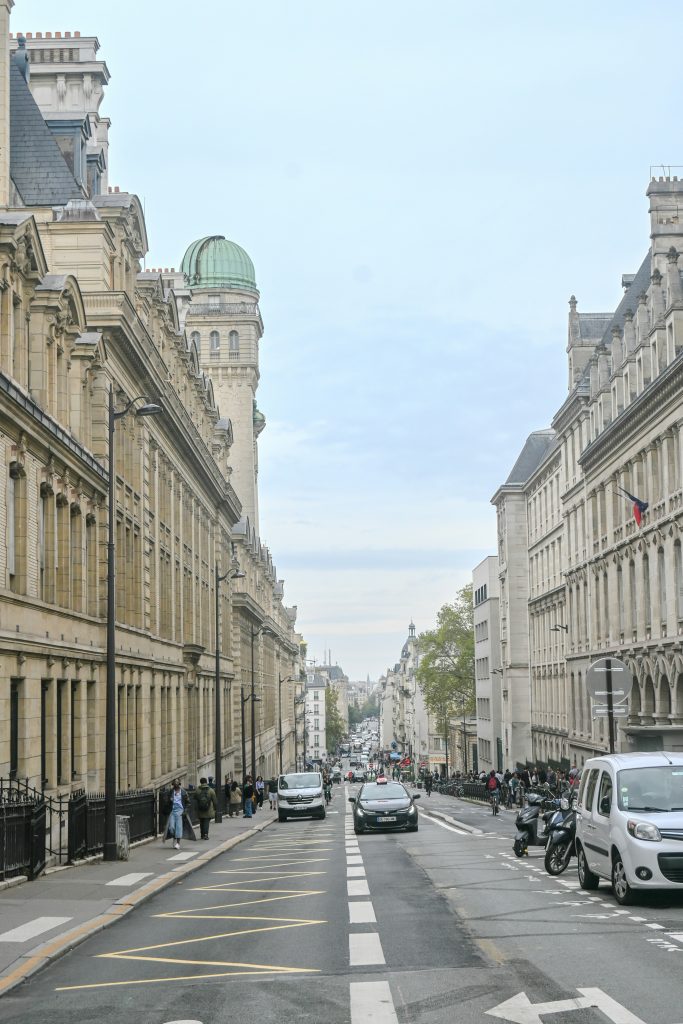
The Latin Quarter and Saint-Germain embody intellectual Paris. Think Hemingway’s haunts, student cafes, and bookshops that smell of possibility. The Sorbonne anchors the 5th, while the 6th retains its existentialist spirit despite creeping gentrification.
Pros: Literary atmosphere, Luxembourg Gardens proximity, excellent bistros, and more affordable than the Marais
Cons: Tourist-heavy near major sights, limited nightlife, some areas feel too polished
Hotel highlights:
- Hôtel Pilgrim: The Latin Quarter’s answer to digital nomads with co-working spaces, community events, and a rooftop bar
- Hôtel Bel Ami: Converted printing house with contemporary art focus
- Hôtel des Grands Voyageurs: New family-friendly option with connecting rooms and kids’ amenities
- Select Hotel: Budget-friendly Art Deco near the Pantheon
Eiffel and Invalides (7th)
Yes, waking up to views of the Eiffel Tower is magical. But here’s what Instagram won’t show you: the 7th is a beautiful suburb. Quiet, residential, and surprisingly disconnected from the rest of Paris’s attractions.
Pros: Iconic views, safe and clean, excellent for families with young children
Cons: Poor Metro connections, minimal nightlife, everything costs 20-30% more, feels isolated after dark
Worth it if: This is your honeymoon, you’re traveling with elderly relatives, or Eiffel Tower views are non-negotiable
Skip if: You want authentic Parisian life, nightlife matters, or you’re on a budget constraints
If you must stay here:
- Hotel La Bourdonnais: Eiffel views without selling a kidney
- Hôtel Muguet: Quiet family-run property near Invalides
Golden Triangle and Champs-Élysées (8th)
The 8th arrondissement is where Paris puts on its diamonds and designer heels. Home to the “Golden Triangle” of luxury shopping (Avenue Montaigne, Champs-Élysées, Rue du Faubourg Saint-Honoré), this is palace hotel territory.
Pros: Luxury everything, central business district, flagship shopping
Cons: Astronomical prices, tourist-heavy, limited authentic dining, corporate feel
The palace set: Four Seasons George V, Le Bristol, Plaza Athénée
Relative “bargains”: Hotel Bowmann, Hotel de Berri
Montmartre Magic (18th)
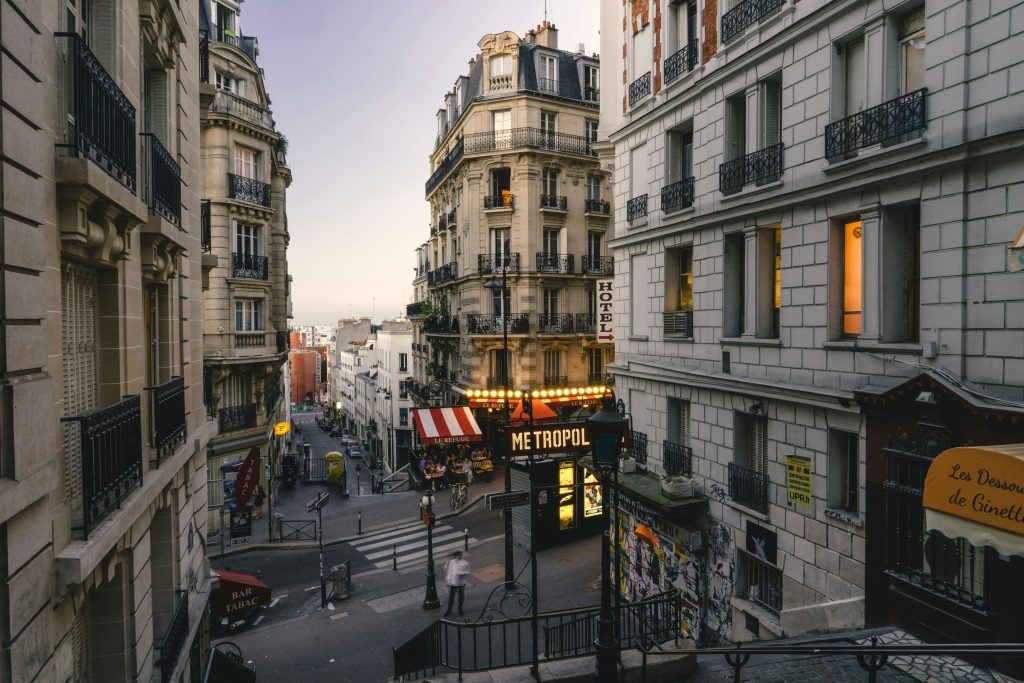
Montmartre presents Paris’s biggest paradox: undeniably charming hilltop views and cobblestone romance, yet increasingly overrun by visitors who’ve transformed it into what locals call a “Disneyfied” tourist trap.
The reality check: Visit Sacré-Cœur at sunrise for the experience everyone promises. Stay elsewhere unless you specifically want the village-on-a-hill vibe and don’t mind the crowds.
Pros: Spectacular city views, artistic heritage, village atmosphere in pockets
Cons: Overwhelming tourist crowds, steep hills, inflated prices, pickpocket central
Best bets if you’re committed:
- Hôtel Terrass’: Historic property with magnificent 7th-floor rooftop bar
- Edgar Suites Montmartre: Eco-conscious aparthotel near Sacré-Cœur
- Le Village Hostel: Budget option with Amelie vibes
Canal Saint-Martin and Bastille (10th to 11th)
This is where young Paris lives, works, and parties. The 10th and 11th have shed their gritty past to become the city’s creative heartland. Think Brooklyn meets Paris, with better cheese.
Canal Saint-Martin (10th) offers waterside aperitifs and vintage shopping, while Bastille (11th) brings the nightlife with everything from craft cocktail dens to all-night electro clubs.
Pros: Vibrant nightlife, excellent restaurants, authentic local scene, great transport links
Cons: Can be noisy, some sketchy pockets late at night, and limited traditional sights
Where to stay:
- The People Paris Nation: Best hostel in Paris with a rooftop bar and frequent events
- Moris Grands Boulevards: Stylish budget hotel with strong coffee game
- Hotel National: Boutique property balancing hipster and heritage
- Generator Paris: Party hostel with canal views
Belleville and 19th/20th Edges
Want to see Paris before gentrification smooths its edges? The 19th and 20th arrondissements offer the city’s most diverse neighborhoods, massive parks, and prices that won’t require a second mortgage.
Belleville pulses with immigrant communities, street art, and underground music venues. The 19th surprises with gems like Parc des Buttes-Chaumont and the summer beach parties at Canal de l’Ourcq.
Pros: Authentic multicultural Paris, incredible value, huge parks, emerging food scene
Cons: Far from major sights, some areas are rough at night, limited English, fand ewer accommodation options
Hidden gems:
- La Belle Ville: Eco-designed budget hotel near Buttes-Chaumont
- Mama Shelter East: Design hotel with rooftop and attitude
- Les Piaules Belleville: Hostel with the best view in Paris
Accommodation Types and Price Guide
Let’s cut through the marketing speak and talk real numbers. Paris accommodation breaks down into distinct categories, each with trade-offs beyond just price:
Luxury Hotels ($650+/night): Palace properties and 5-star deliver the full fantasy with butler service, Michelin-starred dining, and spa treatments that cost more than some hotel rooms. Book for special occasions or expense accounts.
Boutique Hotels ($220-$450/night): The sweet spot for design-conscious travelers. Often converted historic buildings with personality, strong aesthetics, and personalized service. Limited facilities but maximum character.
Mid-Range Hotels ($170-$280/night): Between chain reliability and independent comfort. Expect clean rooms, a decent breakfast, and a strategic location. Perfect for travelers who see hotels as a place to sleep and shower.
Budget Hotels and Hostels ($70-$170/night): Basic but functional, increasingly stylish at the upper end. Hostels have evolved beyond backpacker crashpads with private rooms, designer common areas, and organized social events now standard.
Apartments and Short-Term Rentals: Paris listings face increasing regulation. New rules impose heavy fines for illegal rentals and limit the number of rental nights. Always verify that the registration number is displayed. Apartments are best suited for stays of 5 nights or more, or for groups requiring kitchen facilities.
Specialized Stays:
- Digital nomad hotels: Properties like Hôtel Pilgrim offer co-working spaces and community programming
- Eco-hotels: A Growing category with properties like Solar Hotel using renewable energy
- Apart-hotels: Citadines and similar chains blend hotel services with apartment space
- Capsule hotels: New budget option inspired by Japan
Family considerations: Paris hotels are adapting to accommodate families with features such as connecting rooms, kids’ clubs, and baby equipment rentals. Best family areas: 7th (quiet, safe), 15th (residential, affordable), Marais (central, interesting).
Booking Smart: Seasonality, Deals, and Regulations
Timing is everything in Paris hotel pricing. Here’s what the booking sites won’t tell you.
Price seasonality:
- Peak season (May-September): Rates 30-50% higher, book three to four months ahead
- Shoulder season (March-April, October-November): Sweet spot of decent weather and reasonable prices
- Winter (December-February): Lowest rates except Christmas/New Year, but weather gamble
The 2024 Paris Olympics created a surge of new hotel inventory. We should now see increased availability and competitive pricing as properties strive to maintain occupancy.
Booking hacks that actually work:
- Flexible dates can save you 20-30% by visiting between Tuesday and Thursday (often the cheapest)
- Refundable rates cost 10-20% more but protect against price drops
- Chain loyalty programs offer genuine value in Paris’s expensive market
- Package deals (flight+hotel) can beat separate bookings by 15-25%
Airbnb regulations to know: Hosts must display registration numbers, rentals are limited to 90 days/year, and fines reach $100,000+ for violations. If a listing seems too good to be true or lacks proper documentation, it probably is.
Safety, Scams, and Neighborhoods to Avoid
Paris remains generally safe, but let’s be honest about the challenges. Pickpocketing is prevalent in tourist areas, particularly around the Metro, the Sacré-Cœur steps, and near the Eiffel Tower.
Common scams to avoid:
- Gold ring scam: Someone “finds” a ring and tries to sell it to you
- Petition scam: Fake charity workers distract while accomplices pick pockets
- Friendship bracelet: Forced onto your wrist, then payment is demanded
- ATM helpers: Offering assistance while memorizing your PIN
Neighborhood safety notes:
- Gare du Nord/Gare de l’Est: Sketchy after dark, standard pickpocket zone
- Châtelet-Les Halles: Major transport hub attracts opportunistic crime
- Northern 18th (beyond Montmartre): Some rough pockets best avoided at night
- Parts of 19th/20th: Generally safe, but use common sense after midnight
Emergency numbers: Police (17), Medical (15), Fire (18), EU emergency (112)
3-Day Sample Itineraries by Home Base
Classic Paris (Marais Base)
Day 1:
- Morning: Louvre (pre-book)
- Afternoon: Tuileries to Place de la Concorde
- Evening: Marais neighborhood
Day 2:
- Morning: Notre-Dame area
- Midday: Sainte-Chapelle
- Afternoon: Wander Latin Quarter
- Sunset: Pont Neuf
Day 3:
- Morning: Musée d’Orsay
- Afternoon: Eiffel Tower area
- Evening: Seine cruise
Walking time: 15-20 minutes to major sights
Metro lines: 1, 4, 7, 11 (all easily accessible)
Romantic Paris (7th Arrondissement Base)
Day 1:
- Morning: Eiffel Tower (first entry)
- Afternoon: Trocadéro Gardens
- Evening: Invalides
Day 2:
- Day trip to Versailles
- Evening: Stroll Pont Alexandre III
Day 3:
- Morning: Musée Rodin
- Afternoon: Saint-Germain
- Evening: Sunset from Montparnasse Tower
Walking times: Eiffel Tower five minutes; other sights require Metro
Metro lines: 6, 8, 13
Local Paris (Canal Saint-Martin Base)
Day 1:
- Morning canal walk
- Afternoon Belleville street art
- Evening Oberkampf bars
Day 2:
- Morning Marché des Enfants Rouges
- Afternoon Père Lachaise
- Evening Bastille scene
Day 3:
- Morning Buttes-Chaumont picnic
- Afternoon La Villette
- Evening local bistro crawl
Walking time: Local gems are walkable, 20-30 minutes, Metro ride to tourist sights
Metro lines: 2, 3, 5, 11
2025 Trends: Olympics Impact and Overtourism Solutions
The Olympics changed Paris’ hotel landscape permanently. Hundreds of new properties opened, Metro expansions improved connectivity, and previously overlooked neighborhoods gained boutique hotels. This oversupply means better deals for 2025 travelers willing to explore beyond the usual suspects.
Overtourism solutions being implemented:
- Timed entry systems at major attractions (book slots in advance)
- Tourist taxes are increasing to fund infrastructure improvements
- Local initiatives promoting “Paris Autrement” (Paris Differently), highlighting lesser-known districts
- Seasonal pricing to distribute visitors throughout the year
Responsible travel tips:
- Stay in emerging neighborhoods to spread the benefits of tourism
- Visit major sights in the early morning or late afternoon
- Support local businesses over international chains
- Use public transport exclusively. Paris doesn’t need more Uber congestion
Next Steps in Choosing Your Paris Neighborhood
Choosing where to stay in Paris, France isn’t about finding the “best” Paris neighborhood; it’s about matching your priorities to the right district. For a well-rounded first-time experience, choose Marais. Looking for an intellectual atmosphere? Try the Latin Quarter. While creatives tend to appreciate Canal Saint-Martin, visitors on a tighter budget or eager for a more authentic feel will likely prefer the 19th arrondissement.
Remember, Paris rewards those who venture beyond the tourist checklist. Book that ideally located hotel, but don’t spend your whole vacation inside. Instead, dedicate your evenings to exploring the neighborhood bistros and wine bars where actual Parisians unwind. The magic isn’t at the Eiffel Tower; it’s in the moments between the monuments.
Ready to find your perfect Paris neighborhood? Start by comparing hotel rates across multiple booking sites onTravly.com to ensure you’re getting the best deal for your chosen arrondissement.